ACL Digital

Home / Offerings / Cybersecurity / AI Model & Application Security

End-to-End AI Model & Application Security Testing Services

Protect Your AI Ecosystem with Specialized Adversarial Security Assurance

As companies build LLMs and generative AI into everyday workflows, they are also opening the door to a new category of risk. Threats like prompt injection, model poisoning, and data leakage do not look like traditional vulnerabilities, and most standard security tools simply aren’t built to catch them.

ACL Digital’s AI security team sits at the intersection of data science and cybersecurity, giving us a rare vantage point most security firms do not have. We stress-test your entire AI ecosystem the way real attackers would, probing for weaknesses, simulating adversarial attacks, and benchmarking everything against the OWASP Top 10 for LLMs, so your models are as secure as they are intelligent.

Validate

Security of Training Pipelines

Fortify

LLM & GenAI Model Resilience

Neutralize

Sophisticated Adversarial Attacks

Standardize

AI Safety & Compliance Frameworks

Our AI Security Testing Capabilities

Prompt Injection Testing

Prompt injection remains one of the most significant threats to modern AI applications. We evaluate how effectively models resist malicious prompts, hidden instructions, and attempts to manipulate intended behavior, helping organizations strengthen model reliability and safeguard business logic.

Data and Model Poisoning

Training data integrity directly shapes AI performance. We assess the impact of malicious or biased data introduced during training or fine-tuning, detect abnormal model behavior signaling tampering, and test how poisoned prompts can manipulate outputs in real time.

Sensitive Information Disclosure

AI systems must protect confidential information from unintended exposure. We assess whether models reveal hidden system prompts, sensitive data, configuration details, or other information that should remain protected.

Improper Output Handling

Ungoverned model responses can introduce risk. We evaluate filtering mechanisms and response-handling processes to help prevent harmful outputs, protect users, and reduce unintended actions within connected applications.

Supply Chain Vulnerabilities

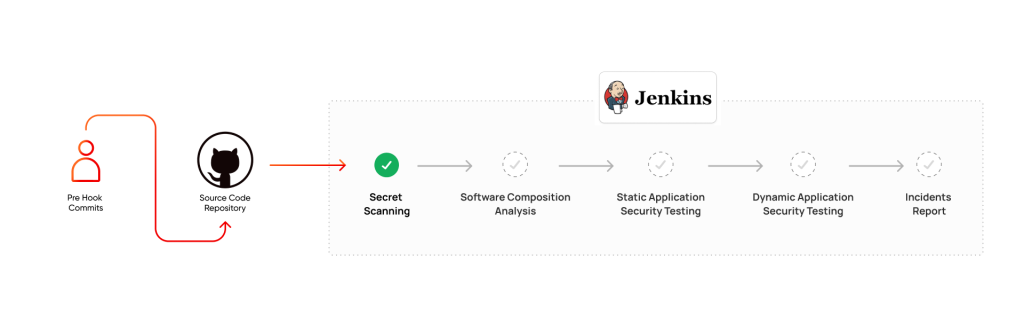
Modern AI solutions rely on multiple libraries, plugins, frameworks, and model dependencies. We assess the components to identify vulnerabilities, exposed configurations, and security weaknesses that could affect the overall AI environment.
Excessive Agency

AI systems should operate within clearly defined boundaries. Our assessments evaluate whether models have unnecessary control over workflows, external tools, or APIs and identify opportunities to strengthen governance and access controls.

System Prompt Leakage

System prompts often contain critical business instructions and operational logic. We use adversarial techniques to test whether attackers can extract hidden prompts, API keys, configurations, or internal workflows, and we recommend ways to strengthen their protection.

Misinformation and Output Integrity

AI-generated misinformation can damage customer trust and business outcomes. We test how models respond to attempts to generate inaccurate, biased, or misleading content, including efforts to exploit AI trust or influence decisions through fabricated information.

Vector & Embedding Weaknesses

Retrieval-Augmented Generation (RAG) systems depend on secure vector databases. We evaluate embedding storage, retrieval processes, and access controls to identify weaknesses that could expose sensitive information or influence AI responses.

Unbounded Consumption

Uncontrolled AI usage can affect application performance and operational costs. We assess how AI systems respond to oversized, recursive, or repeated prompts that could increase latency, consume excessive resources, or disrupt service availability.

Accelerators/Frameworks

CybersecurityInfographic1 acl

Why Choose ACL Digital for AI Model and Application Security?

ai model application security overview
Specialized Adversarial Expertise

AI introduces security challenges that extend beyond traditional applications. Our specialists combine cybersecurity knowledge with AI expertise to evaluate risks unique to LLMs, Generative AI, and intelligent applications.

From training data and model development to APIs, vector databases, applications, and supporting infrastructure, we assess every component that contributes to the security of your AI ecosystem.

Our testing methodology aligns with the OWASP Top 10 for LLMs, providing a structured approach to identifying vulnerabilities, prioritizing risks, and strengthening AI security.

ai model application security overview

Client Impact

What We Think

Micro Frontend Architecture Using Single SPA Lessons from Production Banner
Micro-Frontend Architecture Using Single-SPA: Lessons from Production
Embedding Security Practices in Agile Software Delivery Banner
Secure by Design: Embedding Security Practices in Agile Software Delivery
Securing Agentic AI Based Systems Blog website banner
Securing Agentic AI-Based Systems
How Privilege Escalation Blog website banner
How Privilege Escalation Attacks Lead to Data Exfiltration
The Risk Indicator Banner
The Risk Indicator Layer: Building Explainable Transaction Flags in BFSI Pipelines
cybersecurity Whitepaper banner updated
A Risk-Driven Cybersecurity Strategy for Modern Enterprises
Scroll to Top