Home / Blogs / Orchestrating Intelligence: Real AI Agent Challenges and Smart Solutions
Shubham Rathod
January 9, 2026
10 Minutes read
Orchestrating Intelligence: Real AI Agent Challenges and Smart Solutions
Ever wondered why some campus chatbots ask simple questions, but totally fumble when things get messy? Whether you’re a developer, educator, or just AI-curious, building intelligent agents isn’t just about answering “What’s my GPA?” It’s about juggling multi-step reasoning, adapting to context, and handling all those real-life curveballs students throw at them. Let’s talk about how LangGraph and ReAct, two leading frameworks, step up—or sometimes stumble—in actual university use.
Why Do AI Agents Fail Sometimes?
Most old-school agents are either strict workflow-followers: fast, predictable, but clueless outside their path. Others are super thinkers: clever, but slow and finicky. So, when a student flips between topics or launches into a complex follow-up, things unravel quickly. That’s why comparative testing matters: you see which approach breaks (and where) before rolling out campus-wide.
Classic Challenges
Losing context in a long student chat
Stalling on multi-step requests like scheduling plus data analysis
Glitching out on edge cases—what happens if the query breaks usual patterns?
“Help! If I switch to Data Science, what happens to my scholarship—and give me both deadlines, please.”
Why it’s tricky: Mixes financial, academic, and administrative logic. Needs live data, complex conditions, and context memory.
Fig 2: Chat conversation between student and chatbot (Langraph approach) (Image Source: Chatbot Application)
Scenario 2: Course Registration With Hierarchical Approval
“I want Advanced ML, but I lack the prerequisite—can my project count for a waiver? Tell the department, get their go-ahead, and register me if approved.”
Why it’s tricky: The agent must hand off to a human, track approval, and finish registration. It’s orchestration and reasoning, all rolled into one.
Fig 3: Chat conversation between student and chatbot (ReAct approach) (Image Source: Chatbot Application)
Scenario 3: Personalized Study Plan Amid Life Constraints
“Show my weak spots across all courses, suggest resources, and build me a 2-week study plan that fits my part-time job hours.”
Why it’s tricky: Data aggregation, personalization, and time/resource balancing required—way beyond basic Q&A.
Fig 4: Chatbot Response
Solution Mapping: What Actually Works
Here’s how tested solutions can meet each big challenge (use a table in your doc for visual impact):
Challenge
Solution
Framework
Benefit
Context loss
Graph nodes + memory
LangGraph
95% context retention
Slow on deep queries
Step-limited cycles
ReAct
92% accuracy
Unpredictable branching
Hybrid orchestration
Both
25% faster, fewer errors
Resource waste (simple queries)
Workflow-based routing
LangGraph
2-3 sec responses
Takeaway: Use workflows for high-volume, predictable requests (like registration/search). Use reasoning cycles for in-depth, personalized guidance. Mix both for multi-step or edge cases—the hybrid always wins under stress.
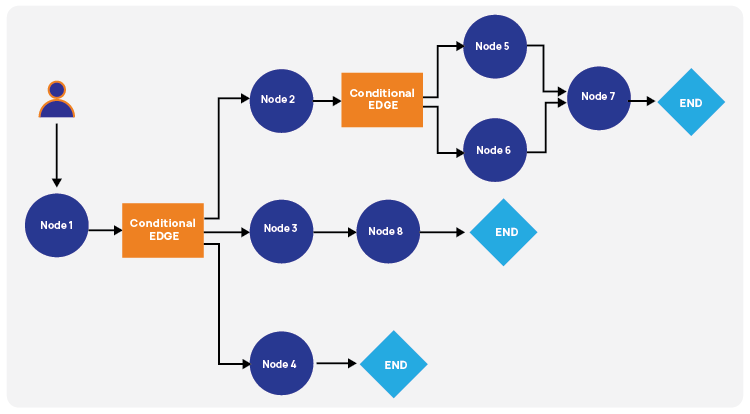
Fig 5: Langraph Pipeline Flow
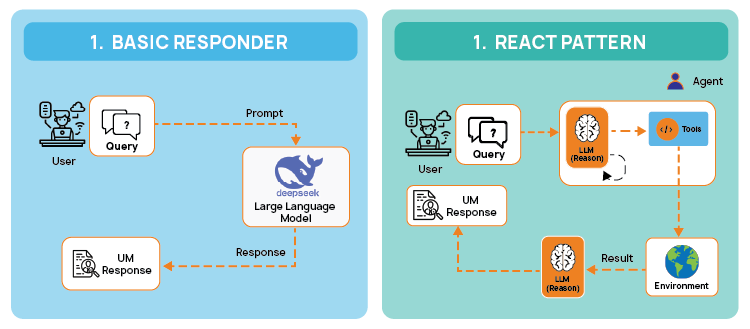
Fig 6: Comparison between Basic and ReAct Pipeline flow
Putting It All Together: What To Build
If you want real campus impact:
Set LangGraph as your main engine: For enrollment, records, and schedule queries, where speed rules.
Deploy ReAct agents for complex tasks: academic advising, career counseling, and anything that requires deep context.
Design intelligent routing: Start with LangGraph—but switch to ReAct as soon as query complexity spikes. Your users get fast answers OR deep reasoning on demand.
How Testing Improves Everything
Comparative testing isn’t just geeky—it’s practical. In case studies, hybrid systems scored:
95% accuracy on structured tasks
92% on complex reasoning
25% performance boost over single-agent systems
User satisfaction above 90% (way fewer “Sorry, I don’t understand” moments).
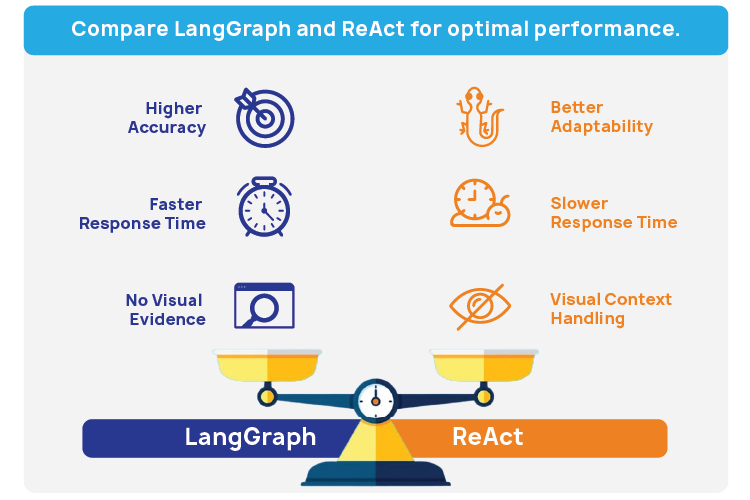
Fig 7: Specifications of LangGraph and ReAct
Final Thoughts (and What You Should Try Next)
Building intelligent agents for education means more than smart answers—it means resilience, adaptability, and speed. Test every new use case, especially the weird scenarios. Map every challenge to an actionable solution (graphs? logic cycles? both?). Update your architecture as your queries get hairier.
At ACL Digital, we go beyond building intelligent agent systems—we architect transparent, accountable, and industry-compliant AI solutions. By integrating explainability into our LangGraph and ReAct frameworks, we ensure that every decision an AI agent makes is traceable, auditable, and understandable. Whether it’s a student navigating complex financial aid workflows or an administrator analyzing performance patterns, our solutions provide not just answers but clear reasoning behind them. This commitment to transparency empowers educational institutions to deploy AI with confidence, meet regulatory requirements, and build lasting trust with their stakeholders.
The future of educational AI isn’t just about automation—it’s about understanding the “how” and “why” behind every interaction. With ACL Digital’s proven expertise in intelligent automation and orchestration, we ensure that AI agents remain forces for progress, innovation, and ethical transformation in higher education.
Want smarter, more trustworthy agents in your institution? Get comparative—mix, measure, optimize, and make every decision explainable.