



ACL Digital
December 12, 2025
5 Minutes read
Emerging Trends Shaping Consumer Electronics in 2026
The consumer electronics industry is entering a transformative era—one defined not by incremental upgrades but by deep integration of intelligence, connectivity, and sustainability. Devices are no longer isolated tools; they are becoming self-learning systems that anticipate user needs, adapt in real time, and evolve with behaviour.
From AI-powered personalization and foldable displays to immersive AR/VR environments and interoperable smart home systems, innovation today is less about features and more about engineering experiences. The shift reflects how product design, data analytics, and human-centric thinking now converge to create smarter, more meaningful interactions between people and technology.
Let’s explore the engineering-driven trends redefining consumer electronics in 2025 and beyond — and how these advances are shaping a more connected, intelligent world.
On-Device AI and Edge Computing
Artificial Intelligence is rapidly becoming the foundation of modern consumer electronics. With neural chips now embedded directly into devices with AI-driven capabilities like real-time language translation, image processing, personalization, and biometric analysis. They are handled locally instead of relying on the cloud. This shift not only accelerates performance but also keeps user data secure on the device.
According to IDC, more than 370 million AI-enabled smartphones are expected to ship in 2025, accounting for nearly 30% of the global market, and this share is projected to reach 70% by 2029. Chipsets such as Apple’s A18 Pro and Qualcomm’s Snapdragon 8 Gen 4 are specifically engineered to support this on-device intelligence.
Wearables like the Apple Watch and Oura Ring are not only simple tracking devices. They function as compact AI systems that analyze heart rate, sleep cycles, stress levels, and other biometrics in real time. Features like the Apple Watch’s ECG transform everyday gadgets into medical-grade diagnostic tools.
AR & VR : A New Dimension of User Interaction
Augmented and virtual reality are rapidly shifting from novelty to practical utility, expanding beyond gaming into retail, education, and healthcare. Affordable hardware and mature software ecosystems are reshaping how consumers interact with digital content and real-world environments. In retail, AR tools like different apps let shoppers visualise products at home, boosting confidence and reducing returns. Deloitte reports that 57% of consumers using AR feel more confident in their purchase decisions. Education is also evolving, with AR/VR-powered simulations and virtual lessons expected to help drive the market to $200 billion by 2025 (Goldman Sachs). As adoption rises, AR and VR will become built-in features of everyday devices, making immersive, interactive experiences a core part of consumer electronics.
Foldable and Flexible Display
Display innovation is redefining what devices can be. Foldable and flexible OLED screens now enable products that shift between compact and expanded modes depending on how users work. Devices like the Samsung Galaxy Z Fold 5 highlight this versatility—functioning as both a phone and a tablet—powered by ultra-thin glass, durable hinges, flexible circuits, and adaptive UIs that adjust instantly to any orientation.
Beyond smartphones, bendable displays are transforming laptops and wearables with lighter builds, curved surfaces, and more intuitive interfaces. As production becomes more cost-efficient, flexible screens will move into new domains such as smart fabrics, automotive interiors, and foldable medical sensors. This next wave of display technology is unlocking designs that are smarter, more adaptable, and more human-centric.
Smart Homes: From Automation to Anticipation
The smart home has matured from a convenience-driven concept to a context-aware ecosystem. Today, the goal isn’t just automation, it’s orchestration. Connected appliances, lighting, entertainment, and security systems now work in harmony through protocols like Matter, allowing devices from different brands to communicate securely and reliably. This interoperability is reshaping product design: engineers now prioritize cross-platform APIs, low-power communication stacks, and edge-based decision logic.
Smart thermostats like Google Nest use behavioural analytics and weather data to predict energy needs, reducing consumption by up to 12%. Meanwhile, smart doorbells with facial recognition enhance safety by identifying known visitors.
5G: The Backbone of Hyperconnected Devices
The leap from 4G to 5G represents more than faster data—it’s the foundation for distributed intelligence. With millisecond-level latency and massive device density, 5G is enabling new frontiers in real-time responsiveness. In healthcare, 5G is accelerating telemedicine through high-definition consultations, remote diagnostics, and continuous health monitoring. Markets and Markets projects the global telemedicine market will reach $155.1 billion by 2027, underscoring the impact of next-generation connectivity.
- Smart vehicles leverage 5G’s ultra-reliable communication for collision detection and over-the-air firmware updates.
- Telemedicine platforms stream high-resolution diagnostics with near-zero lag, enabling remote procedures.
- Wearables and IoT devices synchronize with cloud AI models instantaneously, keeping systems continuously adaptive.
Sustainability
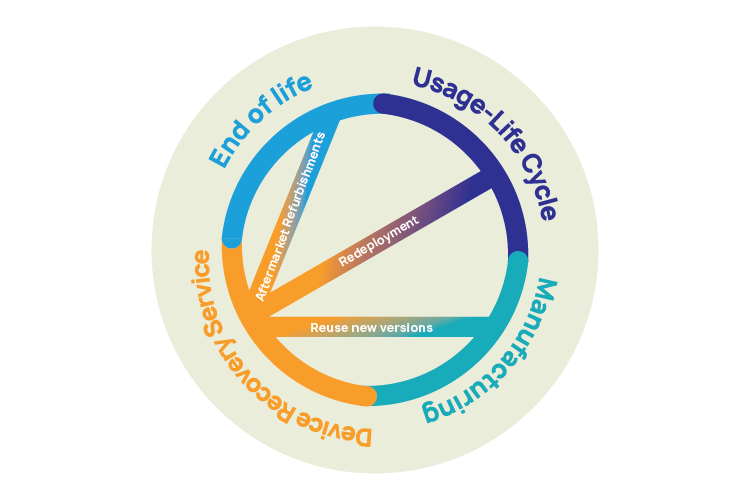
Sustainability has shifted from a marketing claim to a mandatory standard in consumer electronics. Brands are now expected to build cleaner supply chains, extend product lifecycles, and reduce environmental impact.
Industry leaders are already adapting. Apple reported that 75% of its 2023 product materials came from recycled sources—signaling a strong move toward responsible manufacturing. Across the sector, companies are embracing renewable materials, eliminating harmful components, and investing in closed-loop production. The circular economy is also gaining momentum. Modular product designs—easier to repair, upgrade, and recycle—help reduce waste while offering better value to consumers. The future belongs to brands that integrate sustainability into every stage of the product journey, balancing innovation with long-term environmental responsibility.
Voice and Conversational Interfaces
Voice-activated technology has evolved, and now it’s shaping how users interact with devices, access services, and control their environments. Voice assistants like Siri, Alexa, and Google Assistant are embedded across smartphones, smart speakers, appliances, vehicles, and wearables, enabling hands-free, context-aware interactions.
Globally, adoption is growing rapidly. In 2023, over 140 million people in the US used voice assistants, with usage rising in markets like India and Brazil, where voice offers an accessible alternative to typing. In smart homes, voice control has become standard, allowing consumers to manage lighting, security, entertainment, and appliances effortlessly.
For brands, the opportunity lies in creating natural, intuitive experiences—investing in regional languages, tone recognition, and context-aware responses. As voice interfaces integrate across platforms, they become a seamless bridge between home, work, mobile, and automotive environments. The future of voice is not just about commands it’s about truly understanding user intent, making it a powerful differentiator in a competitive consumer electronics market.
Data-Driven Personalization
Personalisation in consumer electronics has evolved from a luxury to an expectation. As devices become smarter and interconnected, users now anticipate experiences tailored to their preferences, habits, and context.
Data drives this transformation. Brands leverage AI to enable smart consumer devices to adjust settings, automate routines, and make predictive suggestions. A smart thermostat, for example, doesn’t just track occupancy—it anticipates user preferences based on seasonal trends, sleep patterns, and energy goals.
Content platforms have already set high standards, using machine learning to deliver recommendations that boost engagement and reduce churn. Companies excelling in personalisation can see revenue increases of 10–30%, according to McKinsey, while Epsilon reports that 80% of consumers are more likely to purchase from brands that personalise experiences.
This trend is now expanding into physical products. Consumer electronics brands are using usage analytics to inform feature design, interfaces, bundles, and even post-purchase engagement. But with growing sophistication comes responsibility: transparency, ethical data use, and consent are critical to maintaining trust and loyalty.
Globally, personalisation is accelerating, with markets like China and India adopting advanced segmentation strategies via mobile and connected platforms. As AI and analytics continue to mature, devices will increasingly feel custom-built for each user—shaping not just interactions, but product design, delivery, and support.
Conclusion
The consumer electronics landscape is undergoing its most profound transformation yet—one driven by intelligence, connectivity, and human-centric innovation. As on-device AI, AR/VR, flexible displays, smart home ecosystems, 5G connectivity, sustainability, voice interfaces, and data-driven personalization mature, devices are evolving from passive tools into proactive digital companions. By 2026, the products shaping our daily lives will be more immersive, intuitive, and environmentally responsible than ever before. The brands that lead this evolution will be those that engineer experiences not just devices while prioritizing security, ethical data use, and seamless interoperability.
ACL Digital plays a key role in enabling this transformation helping consumer electronics brands innovate faster, build smarter devices, and deliver seamless connected experiences. With expertise in embedded engineering, IoT integration, intelligent automation, UX design, and full-stack product development, ACL Digital supports OEMs and manufacturers in bringing AI-powered, sustainable, and interoperable products to market. By combining engineering excellence with human-centric design, ACL Digital helps brands lead the future of consumer electronics.